U.S. Secretary of State Marco Rubio has asserted that recent American military strikes against Iran have compelled Tehran to engage in negotiations regarding its nuclear program and the strategic Strait of Hormuz.
Rubio stated that the attacks weakened Iran's position, making it more amenable to dialogue on issues that had previously been off the table.
This marks a significant shift in the diplomatic posture, suggesting that kinetic pressure is being leveraged to secure a negotiated settlement on regional security and nuclear compliance.
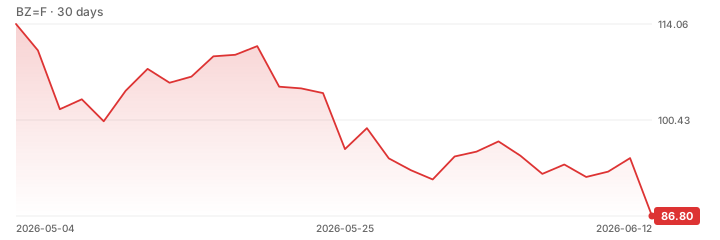
The potential for a diplomatic breakthrough carries immediate implications for global energy markets, which have been volatile due to fears of disruption in the Strait of Hormuz.
Since Iran previously warned that oil tankers must use approved routes or face forceful responses, shipping risk has remained a persistent premium in freight rates and crude prices.
Any credible movement toward de-escalation could see a rapid repricing of that risk, with Brent crude and tanker equities likely to react to signals of reduced transit threat.