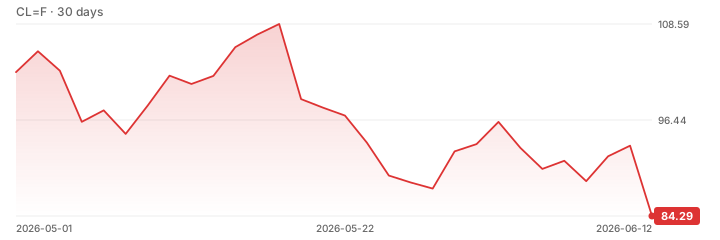
Commercial shipping through the Strait of Hormuz has ground to a near-halt, with observable traffic reduced to a trickle as attacks on vessels and heightened Iranian threats deter shipowners and crews from transiting the waterway.
The collapse in throughput marks a significant deterioration in route security, extending the disruption that has plagued the chokepoint for weeks.
The sharp decline in vessel movements underscores the growing reluctance of the maritime industry to navigate the corridor amid escalating safety concerns.
With just a handful of vessels crossing in recent days, the bottleneck threatens to tighten global energy supplies and keep a risk premium embedded in crude oil prices.
This development follows a period of volatile flows, where brief normalizations were quickly reversed by renewed hostilities.
The stagnation in Hormuz traffic comes as markets continue to price in the geopolitical premium associated with Middle Eastern instability.
While earlier reports suggested a potential easing of tensions, the current reality of minimal transit volumes indicates that the underlying security risks remain unresolved.