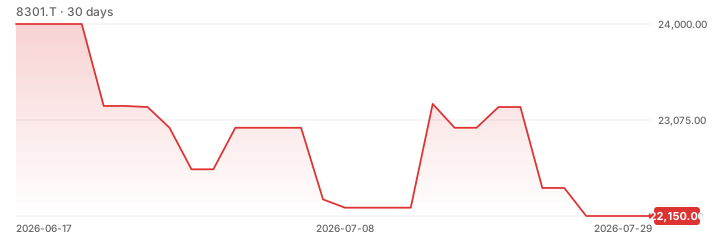
The United States is intervening in foreign exchange markets to support the Japanese yen, a move driven by strategic self-interest rather than diplomatic goodwill.
Washington's primary concern is stabilizing Japan, the largest foreign holder of US Treasury securities, to prevent a disorderly liquidation of American debt that could spike borrowing costs for the US government.
This intervention underscores the growing fragility of the US debt market's reliance on foreign central bank demand.
By bolstering the yen, US authorities aim to reduce pressure on the Bank of Japan to maintain ultra-loose monetary policy, thereby mitigating the risk that Tokyo might be forced to sell Treasuries to defend its currency.
The strategy reflects a broader shift in US policy, where currency stability is increasingly viewed through the lens of domestic fiscal sustainability.
The move follows recent warnings from the US Treasury Department regarding excessive volatility in the yen.