Goldman Sachs has outlined a structural shift in global energy logistics, projecting that the expansion of regional pipeline infrastructure will gradually diminish the world's dependence on the Strait of Hormuz.
The bank’s analysis suggests that while the chokepoint remains critical, alternative routes are becoming increasingly viable, potentially capping the long-term geopolitical premium on crude oil prices.
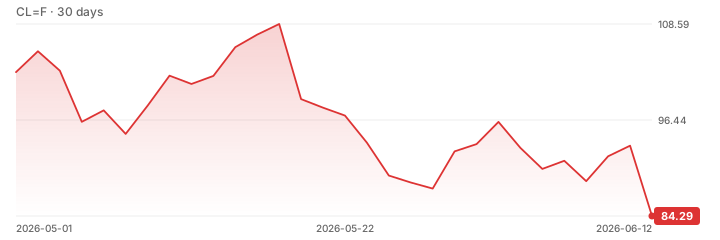
This assessment comes amid renewed volatility in energy markets, driven by attacks on tankers and escalating confrontations between the United States and Iran.
Despite these immediate risks, Goldman argues that the underlying supply chain is diversifying.
The development of new pipelines in the region offers a hedge against disruptions, reducing the binary risk that has historically plagued traders during periods of heightened Middle Eastern tension.
The bank’s view contrasts with its earlier forecast of a significant global oil oversupply in 2027, estimated at over three million barrels per day.