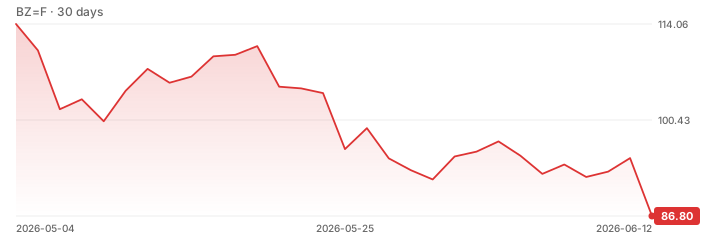
The financial fallout from escalating tensions in the Strait of Hormuz is broadening beyond crude oil, increasingly impacting emerging market currencies and capital flows.
As geopolitical rhetoric between the United States and Iran intensifies, investors are recalibrating risk exposure across a wider array of assets, with the Egyptian pound cited as a key barometer of this spreading anxiety.
Recent Handelsavisen coverage noted that Brent crude had slid below $71 as diplomatic talks briefly eased fears, but the current environment suggests those gains are fragile.
While Brent crude remains the primary instrument reflecting Strait of Hormuz risk, the transmission mechanism is now evident in foreign exchange markets.
The persistence of shipping disruptions and the threat to critical trade routes are forcing a repricing of risk premiums in economies heavily dependent on stable import channels and foreign currency reserves.
This development marks a shift from the earlier phase of the crisis, where markets focused almost exclusively on supply-side shocks to oil.
Recent Handelsavisen coverage noted that Brent crude had slid below $71 as diplomatic talks briefly eased fears, but the current environment suggests those gains are fragile. The risk premium is proving sticky, with traders wary of any sudden escalation in the corridor.