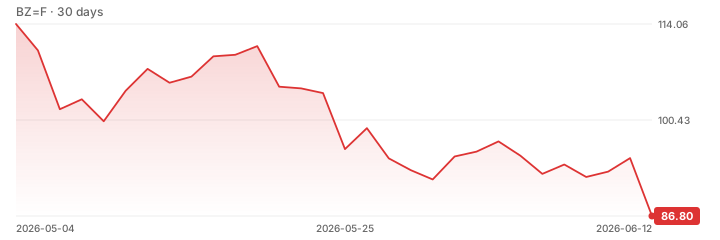
Iraq’s crude oil export revenues fell to $18.679 billion in the first half of 2026, as the country sold 268.1 million barrels of oil.
The figures, reported by Shafaq News, highlight the continued pressure on Baghdad’s primary source of income despite the nation’s status as OPEC’s second-largest producer.
7 trillion Iraqi dinars through May, underscoring the volatility inherent in relying on hydrocarbon exports for state funding.
The revenue decline reflects a combination of lower average prices and constrained export volumes, which have been impacted by regional instability and logistical bottlenecks.
This performance stands in contrast to the broader energy market rally seen earlier in July, when Brent crude surged on geopolitical tensions involving the US and Iran.
Fiscal dependency on oil remains acute for Iraq.
Data from the first five months of the year showed that oil revenues accounted for 84% of federal budget income, a slight decrease from the 91% share recorded in the same period last year. The government collected approximately 33.7 trillion Iraqi dinars through May, underscoring the volatility inherent in relying on hydrocarbon exports for state funding.
The revenue shortfall adds to the political pressure on Baghdad to balance domestic spending with OPEC+ production quotas.