The search for critical minerals is pivoting away from the ocean floor, with industry analysis highlighting land-based deposits as a more viable near-term source for metals essential to the energy transition.
While deep-sea mining has long been touted as a solution to supply shortages, the logistical and environmental complexities of offshore extraction are pushing investors and policymakers to reconsider terrestrial alternatives.
This shift in perspective comes as global demand for nickel, cobalt, and rare earth elements continues to outpace traditional supply chains.
The narrative that deep-sea nodules are the only answer to critical mineral deficits is being challenged by new geological assessments and regulatory frameworks that favor onshore projects with clearer permitting pathways.
Recent developments in Greenland and other regions underscore this trend.
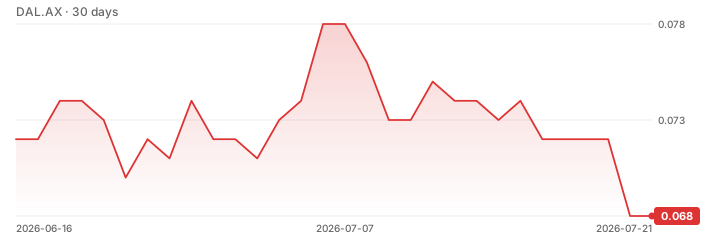
Dalaroo Metals, for instance, has confirmed significant geological thickness at its Blue Lagoon rare earths project in Greenland, revealing unconsolidated sediment layers up to 50 meters thick.