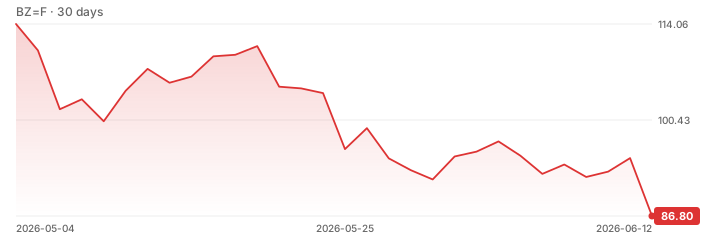
Singapore’s economy is expected to maintain its momentum through the remainder of 2026, with the technology sector positioned to drive the bulk of expansion despite external pressures from elevated oil prices and new US tariffs, according to the Monetary Authority of Singapore (MAS).
The central bank highlighted that the robust performance of the tech industry, fueled by artificial intelligence-related demand, is acting as a critical buffer against these macroeconomic headwinds.
4% in May, defying forecasts of an acceleration, which suggests that the pass-through of higher energy costs to consumer prices has been limited so far.
This resilience follows a strong second quarter, where Singapore’s GDP expanded by 5.7% year-on-year, underpinned by a surge in manufacturing output linked to AI infrastructure build-outs.
While global energy markets face volatility and trade tensions introduce uncertainty, the structural shift toward high-value tech manufacturing appears to be insulating the city-state’s growth trajectory.
Core inflation remained stable at 1.4% in May, defying forecasts of an acceleration, which suggests that the pass-through of higher energy costs to consumer prices has been limited so far.
The MAS assessment underscores a divergence between Singapore’s domestic growth drivers and broader global risk factors.