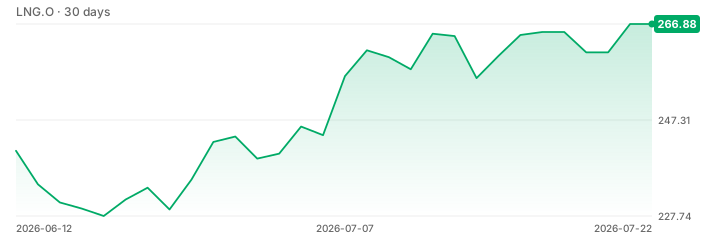
The United States' long-standing buffer against Middle East turmoil is facing renewed scrutiny as geopolitical tensions in the region intensify.
Despite being the world's largest producer of oil and natural gas, the US energy sector is no longer immune to the shockwaves generated by instability in key supply corridors.
The convergence of these geopolitical risks with broader trade policy uncertainties is testing the resilience of the American economy, which has recently relied on its energy dominance as a stabilizing factor.
Markets are responding to the shifting risk landscape with a repricing of energy assets.
Brent crude and WTI benchmarks are reflecting the renewed premium for supply disruption, while natural gas futures are also seeing volatility as traders assess the potential for broader regional conflict to impact global LNG flows.
The divergence in global equity markets overnight, with US stocks closing lower while Asian benchmarks rallied, underscores the complex interplay between geopolitical fear and cooling inflation expectations.