Zimbabwe’s artisanal and small-scale mining (ASM) sector has generated more than US$2 billion in annual revenue, reinforcing its status as a critical pillar of the country’s export economy and rural employment base.
The figure underscores the scale of informal gold production in a nation where large-scale industrial mining has faced persistent operational and liquidity challenges in recent years.
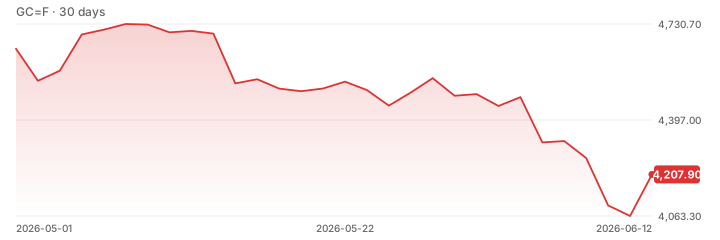
Gold futures have held near the US$4,200 level, reflecting broader geopolitical tensions and safe-haven demand that support prices for both formal and informal producers.
The growth in ASM output comes as global markets continue to price in supply constraints from formal producers, while informal channels expand.
Gold futures have held near the US$4,200 level, reflecting broader geopolitical tensions and safe-haven demand that support prices for both formal and informal producers.
The resilience of Zimbabwe’s ASM sector suggests that informal supply remains a significant, albeit less transparent, component of global gold flows.
This development aligns with a wider trend of institutional attention toward formalizing small-scale mining.