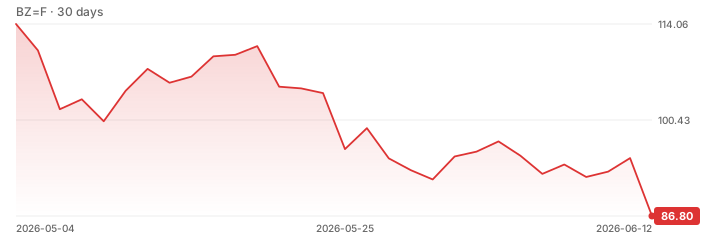
South Korea's consumer price inflation is projected to rise in August, driven by a combination of statistical base effects and persistent cost-push pressures stemming from ongoing tensions in the Middle East, according to the Bank of Korea.
The central bank's assessment highlights the vulnerability of the Korean economy to external supply shocks.
While domestic demand dynamics may remain subdued, the importation of higher energy and commodity costs linked to geopolitical instability in the Middle East continues to feed through to consumer prices.
This dynamic creates a challenging environment for policymakers who are balancing the need to support growth against the risk of entrenched inflation.
The base effect, a statistical phenomenon where low price levels in the same month of the previous year make current increases appear larger, is expected to provide a mechanical lift to the headline figure.
However, the Bank of Korea's specific mention of Middle East tensions suggests that the underlying inflationary pressure is not merely a statistical artifact but reflects real-world supply chain and energy cost disruptions.