Iran has announced a significant expansion of its retaliatory military campaign against United States forces across the Persian Gulf region.
Tehran stated on Monday that the operation involves coordinated missile, drone, and air-defense activities, marking a sharp escalation in the ongoing conflict.
The declaration comes as Iran asserts exclusive sovereignty over the Strait of Hormuz, rejecting foreign involvement in the waterway's security.
The move intensifies immediate risks for commercial shipping and energy transit through one of the world's most critical chokepoints.
With Iran explicitly stating that the Strait "belongs to us, not foreigners," the threat to international vessels and the potential for further disruptions to oil flows have risen sharply.
This follows a period of volatile traffic, where vessel strikes previously caused shipping volumes to collapse before a brief resumption.
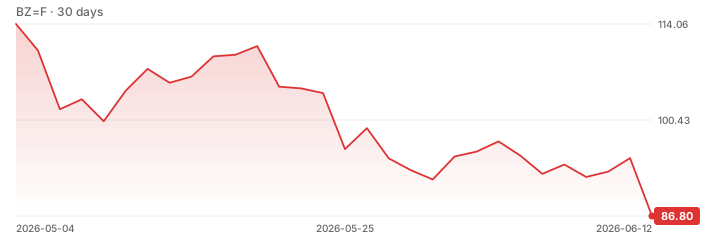
Markets are likely to react to the heightened geopolitical tension with increased volatility in energy prices.
Brent crude, which has already seen upward pressure due to stalled ceasefire talks and Iran's refusal to meet US envoys, faces further upside risk as the prospect of sustained military operations grows. The expansion of hostilities directly challenges the fragile stability that had allowed some shipping to resume in recent days.