Iranian crude supplies at sea are mounting as Tehran’s aggressive export push following the June 14 ceasefire deal fails to find willing buyers.
Fifty-two tankers have departed Iranian ports since the truce, yet sales remain sluggish, leaving a growing inventory of floating crude that threatens to weigh on global physical markets.
The rejection of Iranian barrels is driven largely by Beijing, which has reportedly tightened financial restrictions on oil trade with Tehran.
Chinese buyers are increasingly opting for cheaper alternatives from rival producers, a shift that underscores the structural difficulties Iran faces in monetizing its output despite the diplomatic thaw.
This demand-side constraint adds to the widening discounts already visible in global physical crude markets, where Middle Eastern supply is overwhelming current absorption capacity.
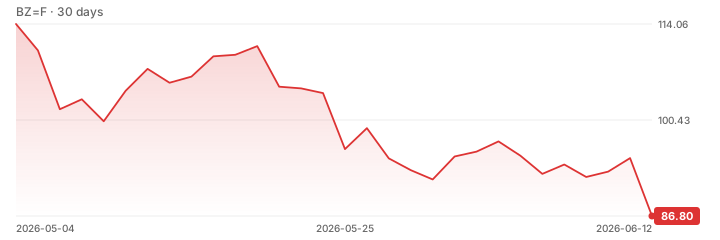
The situation marks a sharp contrast to the initial market reaction to the ceasefire, which saw oil prices slide as traders priced in a normalization of flows.